
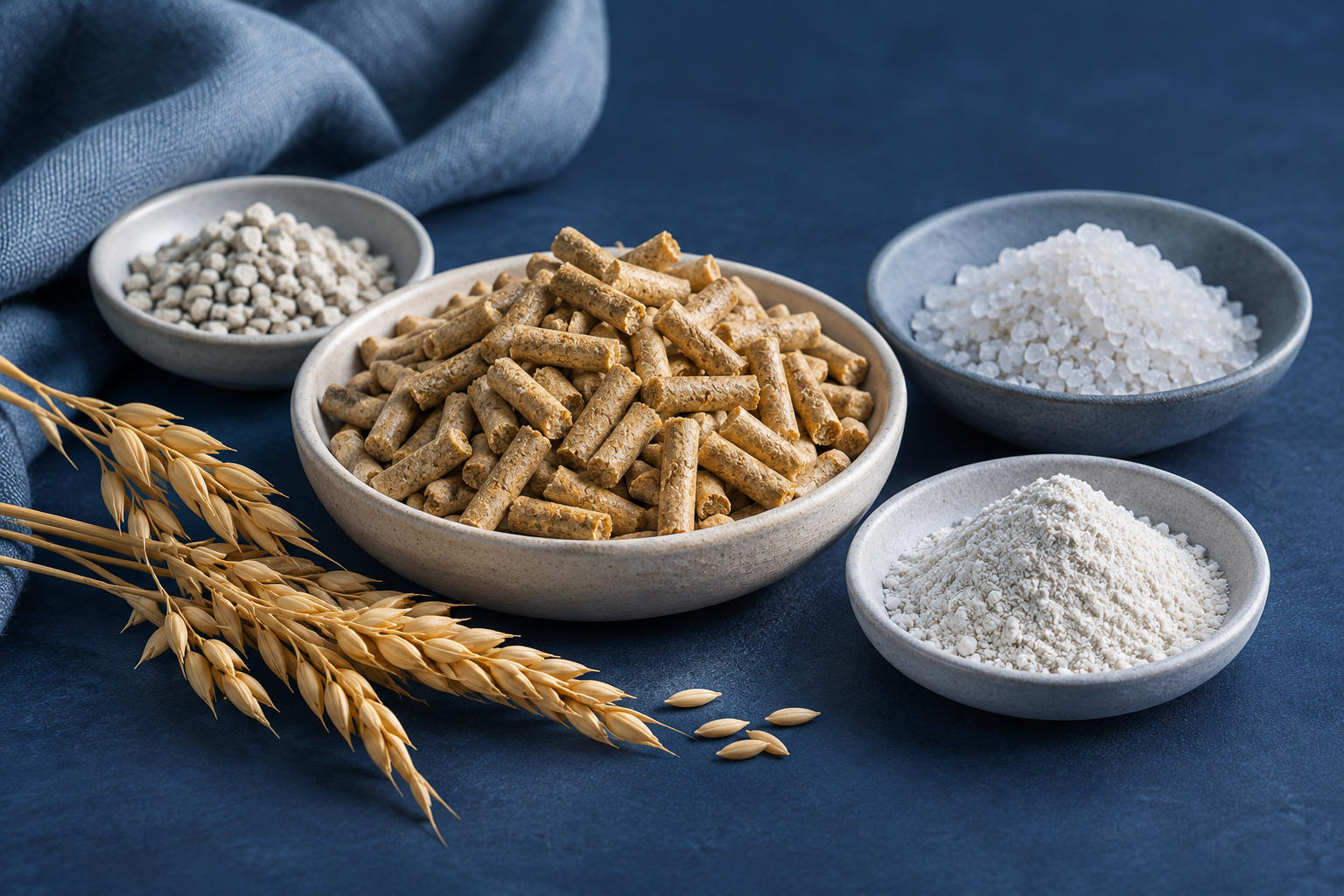
An animal feed additive should be considered within a defined feeding programme. A useful sourcing conversation begins with the intended purpose and the context in which the product will be used. It then moves to product identity, supporting information and the practical requirements of the feed operation.
- Define the intended purpose with the appropriate nutrition professional.
- Ask for product-specific information relevant to the intended use.
- Keep supplier, batch and stock records connected.
State the purpose before choosing the product
Describe the species, production stage and feeding context in the enquiry. Explain the objective in terms that the responsible nutrition professional can assess. A broad request for ‘better performance’ is less useful than a clearly defined purpose within the existing programme.
Product suitability should be reviewed in that context. This article is a procurement guide, not a feeding recommendation: formulation and use decisions should follow the relevant product information and professional assessment.
Know exactly what is being supplied
Request the product specification, declared composition, intended-use information and relevant supporting documentation. Check that the information refers to the exact product under discussion, not only to an ingredient category or a similarly named range.
When reviewing a claim, ask which evidence relates to the product and which relates to an ingredient more generally. Keep the intended species and use conditions visible in the discussion. Evidence should be assessed for its relevance, rather than selected only for an attractive headline.
Treat traceability as part of the purchase
FAO’s guidance for the feed industry, based on the Codex Code of Practice on Good Animal Feeding, highlights informative labelling and traceability through records. Supplier identity, lot information and clear handling instructions are practical parts of a responsible supply relationship.
Within your own operation, keep deliveries linked to their batch details and accompanying documents. Make it straightforward to identify which material was received and where it went. A purchasing record is most useful when it can be connected to the stock actually held.
Reference: FAO: Good practices for the feed industry ↗
Look at the day-to-day handling requirements
Discuss pack size, storage conditions, stock rotation and the way the material enters the operation. The people receiving and handling the product may identify requirements that are not obvious from the purchase enquiry alone.
Review the product’s actual instructions and documentation with the relevant team. Do not assume that a new supply can be handled or used exactly like a previous one because the packaging or product description looks familiar.
Build a useful supplier conversation
A focused brief can include the intended purpose, species, existing feeding context, required documentation, preferred pack size and anticipated purchasing volume. Identify the technical person who can review the product information alongside the commercial team.
Staron’s animal feed additive portfolio is a starting point for discussing your requirements. Share the application and documentation needs with our team so the conversation can focus on an appropriate product and supply arrangement.
Discuss your animal nutrition requirements
Share your application and requirements with the Staron team.
Start a conversation ↗